• HCAFA – Celebrating 20 Years

  • Reminders

  • HCAFA Executive Committee monthly meetings listed below (conducted via Zoom). All HCAFA members are invited to join the sessions. Dates as follows:

    • November 7th (10:00, Zoom)
  • For information, contact HCAFA President Steven Titus at satitus@gmail.com . Voice-mail messages (847.359.0300) are forwarded to us. For an emergency situation, you may contact the HCAFA President via email (hcafapresident@gmail.com) or IEA's central office in Springfield at https://ieanea.org/ieaconnect/ for telephone and live chat during their limited weekday hours as well as the email option. 

Analysis of Illinois Legislators’ “Stop Gap” Budget

Members of the Illinois General Assembly and Governor Rauner have come to an agreement on what is being referred to as a “stopgap” budget package that includes some appropriations for additional FY 16 funding and partial year FY 17 funding for some programs and agencies. The appropriations parts of the budget package are coupled with other legislation including a TIF district in Chicago and changes in the Chicago Teacher’s Pension Fund.

Both PreK-12 and higher education are funded in the appropriations bill that passed both chambers (SB 2047). K-12 education is funded for the entire fiscal year (FY 17) while higher education will receive approximately $1 billion in partial funding for the current fiscal year and the start of FY 17.

General State Aid for school districts will increase by $361 million, including the creation of a new $250 million Equity Grant. The language of the bill further ensures that no district will receive less than it did in FY 16.  Early childhood education will also increase by $75 million. Most other funding in the K-12 budget will match FY 16 levels, including mandated categoricals, bilingual education and career and technical education.

The $1 billion in higher education funding includes approximately $655 million to individual state universities, $114 million in base operating and equalization grants to community colleges. It also includes more than $150 million in MAP grant funds to cover obligations from FY 16 and $20 million the Illinois Board of Higher Education (IBHE) and the Illinois Community College Board (ICCB) can distribute to public universities or community colleges that apply for emergency assistance.

While SB 2047 did include most funding for pension payments for the Teachers’ Retirement System (TRS) and the State Universities Retirement System (SURS), the appropriated amounts fall slightly short of the funding level required for TRS and SURS.

The bill also failed to include any funding for the Teachers’ Retirement Insurance Program (TRIP). However, it is important to note that the State Pension Funds Continuing Appropriations Law remained intact, meaning TRS, SURS, and TRIP will still receive the following amounts even though the budget just passed did not fully appropriate them:

  • Teachers’ Retirement System (TRS) – $3.9 billion
  • State Universities Retirement System (SURS) – $1.7 billion
  • Teachers’ Retirement Insurance Program (TRIP) – $110 million

The bottom line is that SB 2047 and other bills part of the “stop-gap” budget package passed both chambers and will be sent to Gov. Rauner for his signature.

UPDATE: Gov. Rauner has signed the legislation.

HCAFA Wishes You a Wonderful Summer

The HCAFA negotiating team hopes to have a wonderful summer too.  They’ve been busy negotiating with the Harper administration on your behalf.  All hope to end the negotiations with great improvements to our contract.  That would make this summer and the following seasons wonderful for the team and the adjuncts they serve.

Please feel free to contact the team if you have time to support their efforts.

And What a Celebration It Was!

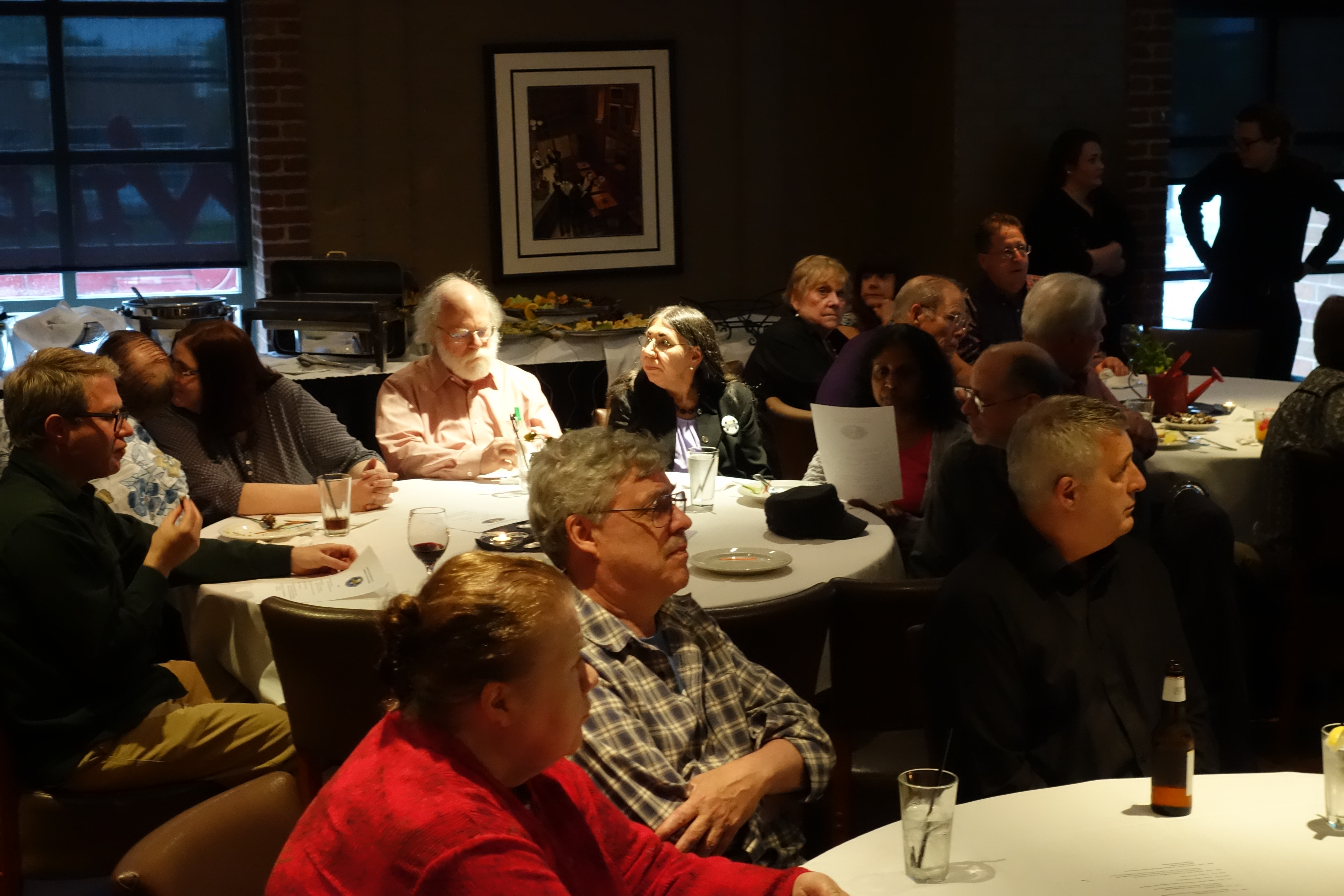
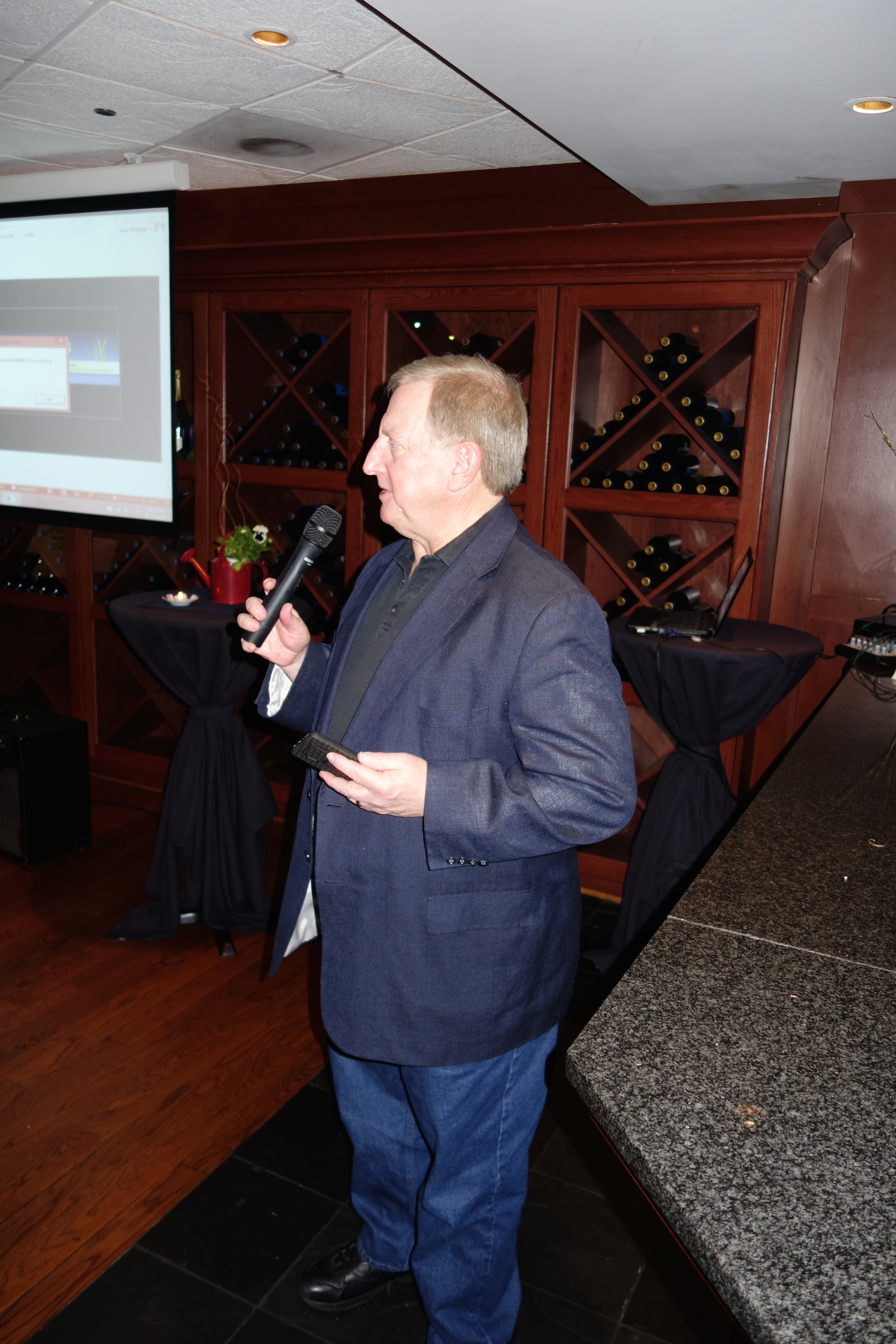
Last night, Harper adjuncts had a chance to get together, network, and enjoy a sumptuous complimentary dinner at the Westwood Tavern and Inn.  The conversations were stimulating and exciting; the buffet was extravagant and delicious; the presentations by special guests were informative and heartfelt.  Overheard were several adjuncts talking about their hope that HCAFA would repeat the dinner soon and often.

It’s not clear yet when HCAFA will have another event exactly like this, but plans are underway to have a summer picnic for adjuncts and their families.

DSC05769

DSC05725

Lead HCAFA Negotiator Crystal Bush Welcoming Adjuncts

Lead HCAFA Negotiator Crystal Bush Welcoming Adjuncts

Palatine Township Democratic Committeeman Matt Flamm

Palatine Township Democratic Committeeman Matt Flamm


READY TO RETIRE?

Thinking about retirement? Your association will still be there for you…and remember, if it doesn’t start with IEA – it isn’t us!

IEA-Retired is your continuing connection to the services, programs, discounts and advocacy efforts of the Illinois Education Association-NEA.

Below are just a few of the IEA-Retired membership benefits.

1)IEA-Retired colleagues and friends stay involved by meetingtogether regularly in local chapters. They conduct greatprograms, stay active in support of public education,participate in IEA conferences and activities, and engagepolitically to protect state retirement programs and benefits.

2)You’ll continue to receive the outstanding discounts and money-saving programs availablethrough NEA Member Benefits and IEA’s Access Saver programs. Saving money is even moreimportant in retirement years. After registering on the site, you will have access to:

NEA complimentary life insurance

NEA guaranteed issue life insurance (guaranteed for those 45 and over). $10,000and $20,000

NEA dental and vision insurance

NEA retiree health program (Medicare supplement insurance). Typically 15 percentcheaper than competition.

3)NEA Educator’s Employment Liability insurance protection continues. If you intend to substitute teach or take any temporary employment in the public schools during yourretirement, this protection is essential and brings great peace of mind. Continue reading

Fun, Networking, Music, and a Fabulous Complimentary Dinner for Adjunct Members: Make Sure to Sign up Soon!

Westwood Tavern and Inn

1385 N. Meacham Rd., Schaumburg

FRIDAY, MAY 13, 6:30 – 9:30 p.m.

Space is limited. Respond to Crystal soon to secure your place at

hcafacp1@gmail.com

Adjuncts’ guests will be welcomed if space permits.

Congratulations

Congratulations to:

NEA Representative Assembly Delegate

Taimi Wilk

Region 42 Minority Representative

Minerva Milford

Region 42 Council Representatives:

Crystal Bush

Taimi Wilk


Complimentary Dinner and Rally for Harper College Adjuncts on May 13

Harper Adjuncts, You Deserve the Royal Treatment!

Join Your Fellow Harper Adjuncts for a Buffet-Style Dinner & Rally

Compliments of HCAFA

Network with fellow adjuncts, meet your contract negotiations team, find out what’s happening with HCAFA, and hear a special guest speaker

Westwood Tavern and Inn

1385 N. Meacham Rd., Schaumburg

FRIDAY, MAY 13

6:30 – 9:30 p.m.

Space is limited. Respond to Crystal soon to secure your place at

hcafacp1@gmail.com

Adjuncts’ guests will be welcomed if space permits.

  (You may add the name of one adult guest to our priority waitlist.)

April Edition of The Harper Adjunct Advocate in Mailboxes

Check out the latest edition of The Harper Adjunct Advocate for information on both our upcoming contract negotiations with the College and unions’ win in the Supreme Court regarding fair share dues deduction.

Harper Adjunct Advocate – April 2016

Supreme Court Decision Supports Unions’ Right to “Fair Share”

The United States Supreme Court on Tuesday morning affirmed by a tie vote the rights of public unions to ask teachers to pay union dues.

In a one-sentence statement in Friedrichs v. California Teachers Association, the Court said that “the judgment is affirmed by an equally divided Court.”

That decision will send the case back to lower courts to consider again and leaves in place the precedent that teachers and other public workers, in about half on the nation’s unions, need to pay fees to support unions, even if they don’t participate in them.

In the case, the Court was asked to determine whether requiring teachers to pay mandatory dues for union activities violates the First Amendment.

The concept of fair-share payments was previously upheld in Abood v. Detroit Board of Education. This system is a compromise between free-speech and labor advocates, in which a union’s non-consenting members are required to pay for only the most basic tasks of representation, such as negotiating contracts. Under Abood, employees do not have to subsidize the political activities of the union, as that would amount to forced speech.

California teacher Rebecca Friedrichs, supported by the Center for Individual Rights, argued that she should have no obligation to pay any union dues whatsoever, since any payment is still a violation of her First Amendment right to free speech.

Last year, in Harris v. Quinn,  the Court said home health care aides in Illinois didn’t have to pay union representation costs for a public workers’ union they didn’t belong to. But the Court also said the workers weren’t “full-fledged public employees,” upholding in principle the Abood decision that underpins the public union sector.

In 1977, the Court said in Abood that states could make workers contribute to public unions. In his majority Harris decision, Justice Samuel Alito was highly critical of the Abood precedent, but in the end, the Court’s conservative bloc decided to rule narrowly on the issue of the Illinois workers and leave bigger issues about public sector unions for another day

Is Your Retirement in Jeopardy? Encourage Your Elected Officials to Support the Social Security Fairness Act and Not Reduce Your SURS Benefits

GPO-WEP fix, the Social Security Fairness Act, fights unfair offsets that slash retirement benefits

Posted July 1, 2015

Tags: , , , , , , , , ,

Imagine this. You’ve spent the last 30 years dedicating your life to teaching students Algebra at a local high school. And during those decades in the classroom, to help make ends meet, you’ve worked several part-time jobs—including a 15-year stint as a night auditor at a local hotel. But now, you’re looking forward to retirement—that is, until you learn about a government offset called the Windfall Elimination Provision (WEP), which is going to reduce your Social Security check by almost half.

Take Action ›

Email your elected officials today and urge them to support the Social Security Fairness Act of 2015. Click here ›

While it sounds like a retirement nightmare, for hundreds of thousands of educators, police officers, fire fighters and other public service employees, it’s a reality. The Government Pension Offset (GPO) reduces public employees’ Social Security spousal or survivor benefits by two-thirds of their public pension — nine out of ten people lose their entire spousal benefit, even though their spouse paid Social Security taxes for many years. WEP reduces the earned Social Security benefits of an individual who also receives a public pension from a job not covered by Social Security — hard-working people lose a significant portion of the benefits they have earned themselves.

What this means, in real terms, is that public servants such as teachers, firefighters and police officers are losing the benefits they earned through a lifetime of public service. Loss of benefits can result from moving from private to public employment and vice versa, or moving between states that have different GPO/WEP or Social Security rules. Continue reading